Barre - Groton - Lunenburg (Fitchburg) - New Hampshire (Rindge, Stoddard)

                Barre Groton Lunenburg Rindge Stoddard
first settlers  1720   1655    1718     1738    1752
incorporated    1774   1655    1728     1768    1774
first ancestor  1763   1714    1756-    1738    1861
last ancestor   1816   1737    1872     1785    1873+
# of ancestors    3     12      12        5       3
# of immigrants   0      0       0        0       0
# born in town    0      2       3        1       0
# died in town    2      2       8        1       0

  • GIBSON family (1756-1813)
  • HEYWOOD family (1778-1872)
  • HOLDEN family (1657-1694) of Groton
  • NUTTING family (1656-1676) of Chelmsford and Groton
  • PRIEST family (1687-1776)
  • SAWTELL family (1662-1676) of Groton
  • WELCH family (1740-1860)


    Lunenburg, incorporated in 1728 and Fitchburg, incorporated in 1764, border Lancaster and Leominster on the northwest. Part of Fitchburg was originally in Lunenburg. The three adjacent towns of Billerica, Chelmsford, and Groton (east to west) were all incorporated on the same day in May, 1655. Shirley was later carved out of the southwest part of Groton, and Westford was carved out of the western half of Chelmsford. Groton lay immediately to the north of Lancaster. Although all three towns were started together, Groton lagged behind because it's surveyor died, and it took until 1661 until the survey was completed. Practically speaking, 1662 was when Groton started. Along with Lancaster, it was devastated during King Philip's War: every building was burned except for four garrison houses. Fortunately, unlike Lancaster, only two lives were lost, one being our ancestor.

    Our ancestor ELIZABETH ATKINSON is listed in the Groton marriage records when she married Joseph Priest of Harvard, but there are no other records of Atkinson in Groton. See the Lancaster Chapter for more on her.

    The GIBSON family (1756-1813)
                      |-Abraham Gibson
       Rebecca Gibson-|
                      |-Esther Fox
    
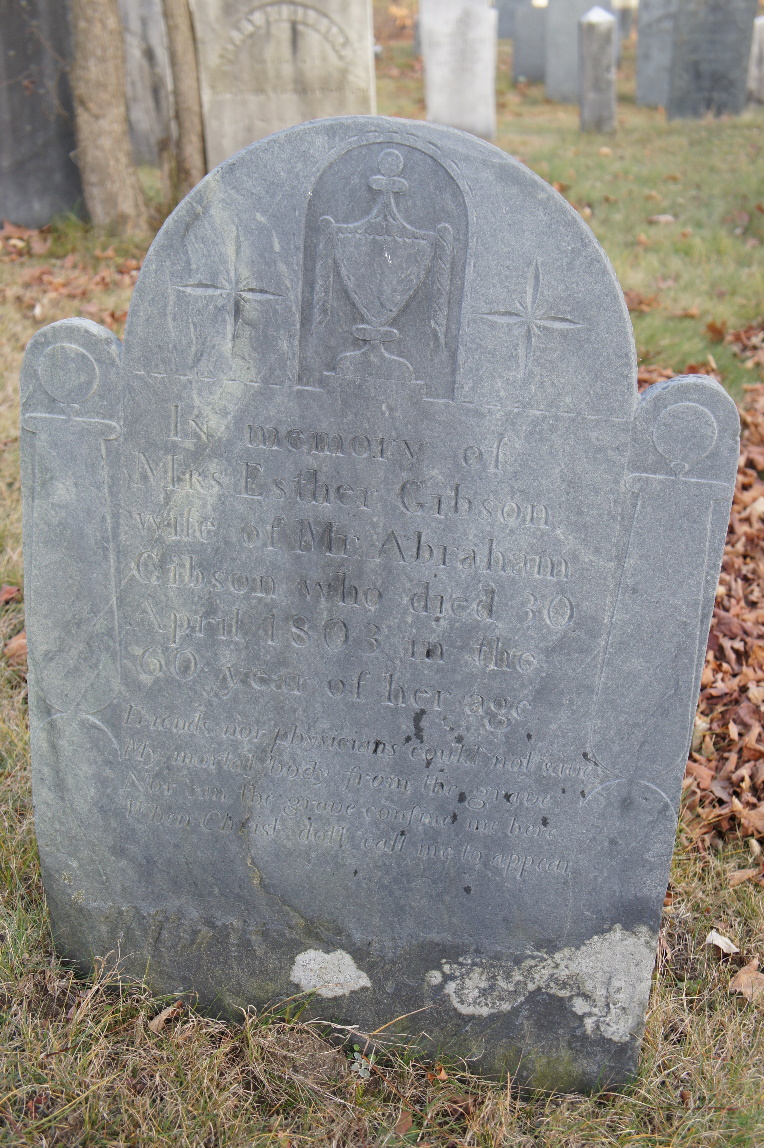
    The Gibson ancestors came first to Cambridge and then to Stow, where ABRAHAM GIBSON Jr. was born in 1735. Once he grew up he moved to Lunenburg where he was a schoolmaster. A quit claim deed for the parental homestead from his siblings to him in 1756 said "to Abraham Gibson of Lunenburg, laborer". He returned to Stow, married ESTHER FOX of Concord in 1760, moved to Concord after a year, and then on to Fitchburg in 1768. Their first child was born in Stow, the next four in Concord, and the last four in Fitchburg. The family lived on a farm of 150 acres on the eastern slope of Pearl hill. ABRAHAM was one of the 44 Fitchburg minutemen in Col. Asa Whitcomb's regiment who marched on April 19, 1775, serving 5 days. He also enlisted for three months in 1778 under Col. Abijah Stearns. After the war he served as selectman in 1778 and 1779. In 1791 his name disappears from the tax roll of Fitchburg. His daughter, REBECCA, married JOHN PRIEST in 1785 and immediately moved to Rindge, N.H.; ABRAHAM and ESTHER probably moved there to be with the grandchildren because ESTHER died in Rindge in 1803. The Priest family returned to Lunenburg around 1810, where ABRAHAM died in 1813.
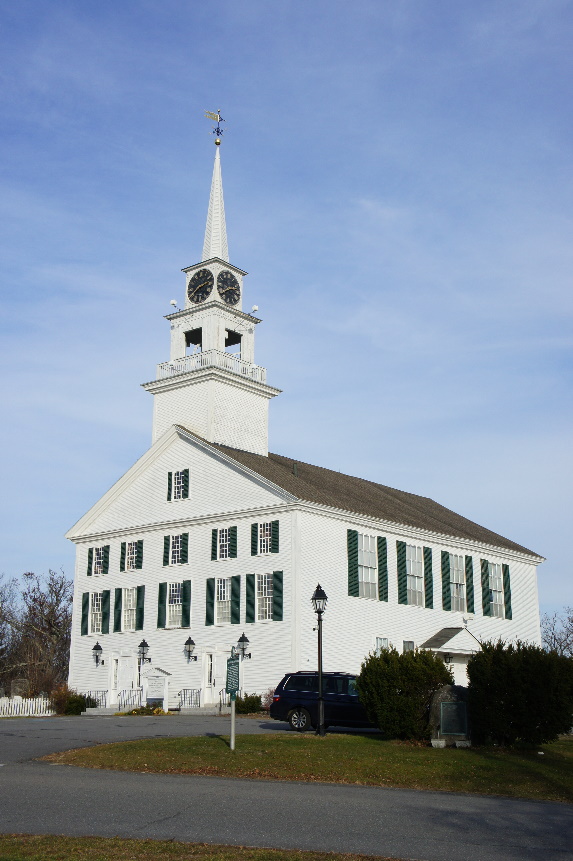
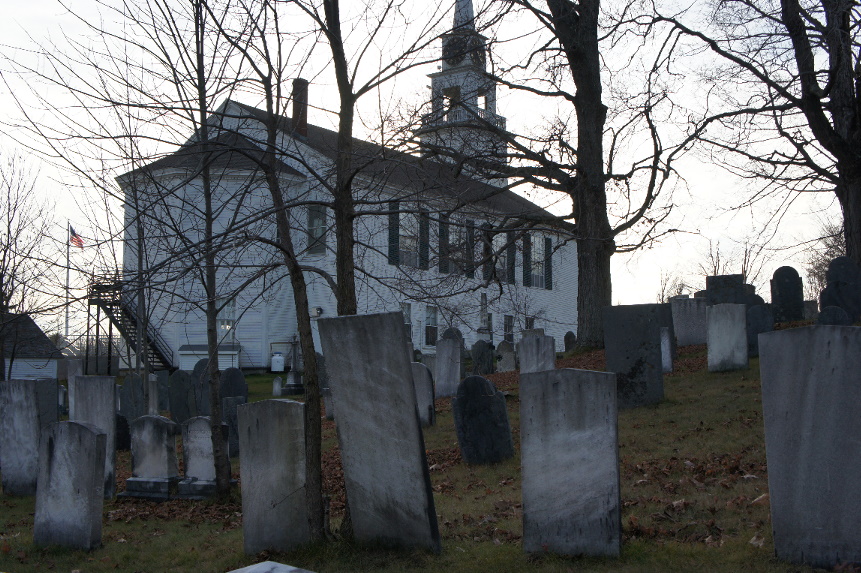
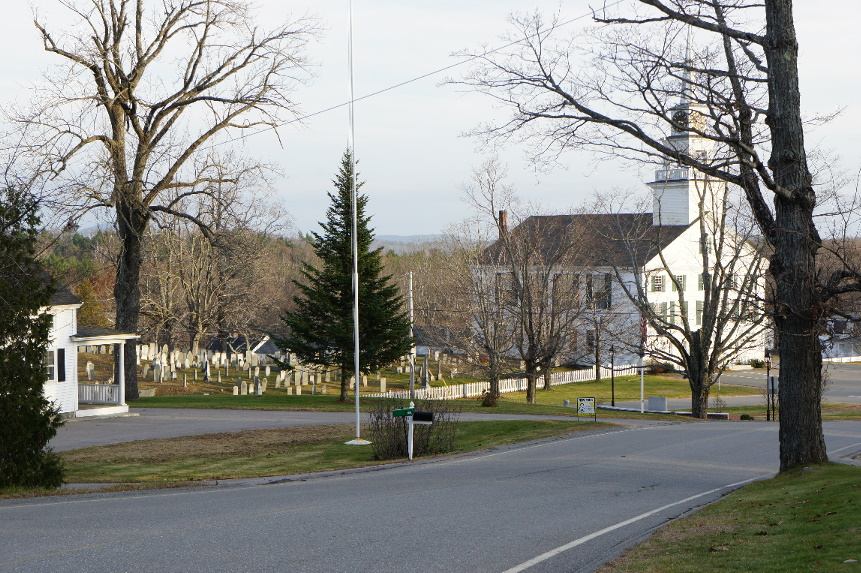
    Rindge, New Hamphire 2nd Meeting House (1796) and Cemetery
    In memory of
    Mrs  Esther Gibson
    wife of Mr. Abraham
    Gibson who died 30
    April 1803 in the
    60 year of her age.
    Friends nor physicians could not save
    My mortal body from the grave.
    Nor can the grave confine me here
    When Christ doth call me to appear.


    The HEYWOOD family (1778-1872)
                                         |-John Prescott Heywood
                       |-Lincoln Heywood-|              |-Noah Ripley
       Abigail Heywood-|                 |-Lydia Ripley-|
                       |-Rebecca Priest                 |-Lydia Kent
    
    We first learned of the Ripley family in the chapter on Hingham. NOAH RIPLEY married LYDIA KENT in Hingham on Dec 22, 1743, had two children born in Hingham, but then moved to Woodstock, Connecticut, which is in the northeastern corner of Connecticut. At the time they moved there, probably around 1747, Woodstock was still a part of Massachusetts since it was given to Connecticut in 1749. Joshua Ripley, the brother of our first PETER RIPLEY, had moved near there, and NOAH probably had cousins there. After another 11 children were born (including Dr. Ezra Ripley, famous in the history of Concord, and LYDIA, born in 1757), they moved by 1763 to Barre (pronounced "berry"), Massachusetts, where the last 6 children were born - an astounding 19 children! The last child was born Oct 18, 1772 when LYDIA was 47 years old. She lived another 44 years and when she died June 17, 1816, aged 91, she had 97 grandchildren and 106 great grandchildren!!
    Barre was first settled in 1720 and called the Northwest District of Rutland, later called just the Rutland District. It was incorporated as the town of Hutchinson on June 14, 1774 after the former royal governor, but the townspeople complained and the name was changed to Barre in June of 1776 to honor Isaac Barre, a British Member of Parliament who was a champion of the American cause and coined the phrase "Sons of Liberty". At this time it had about 750 people. When the Revolution started at the "Lexington Alarm", NOAH RIPLEY, at age 53, marched from Barre in Capt. John Black's company. He later served under Col. Nathan Sparhawk to reinforce the army at Bennington, VT., where the American militia decisively defeated British General Burgoyne in August of 1777. The Seventh Worcester continued to serve until October. NOAH died in Barre the following year. His wife LYDIA, remarried John Burnett and lived another 38 years before also dying in Barre. The
    inventory of NOAH's estate was £1955.13.
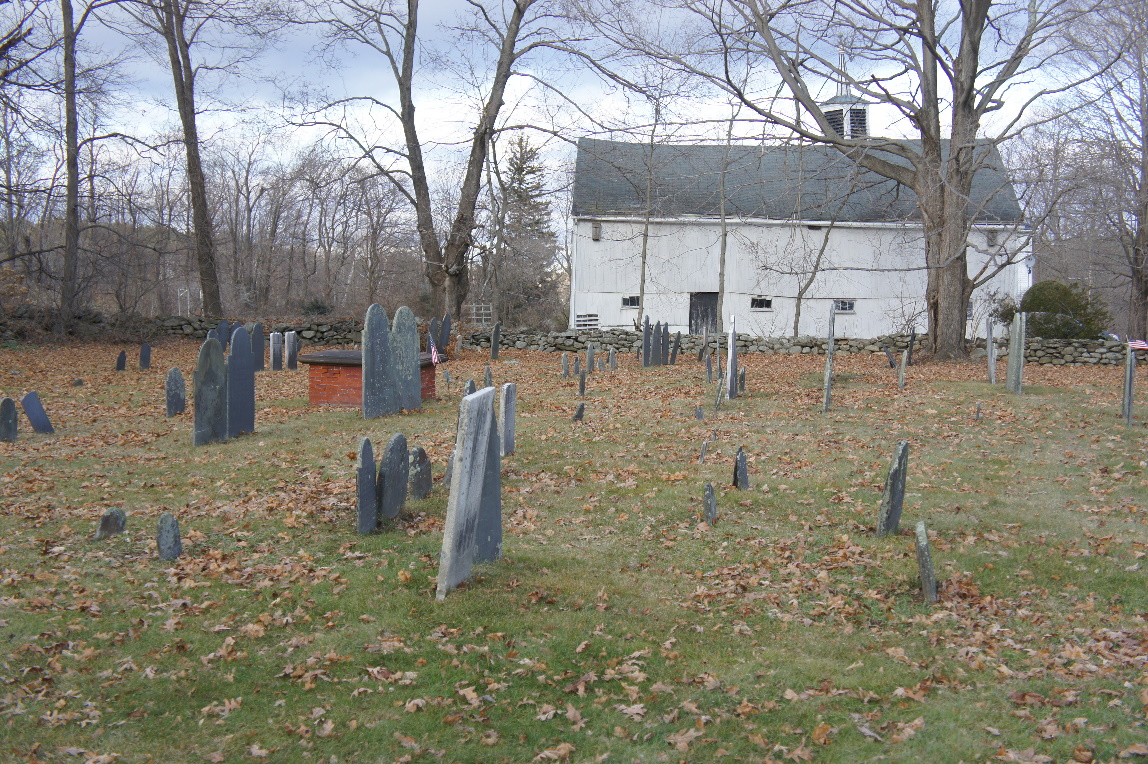
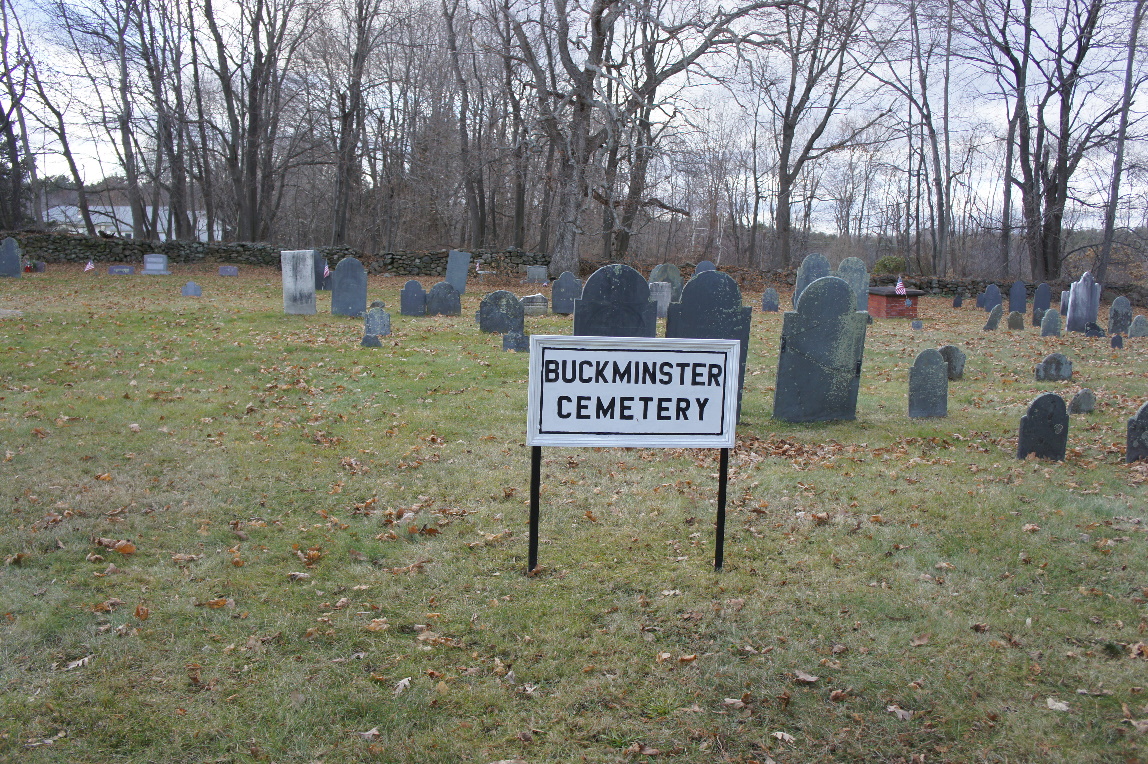
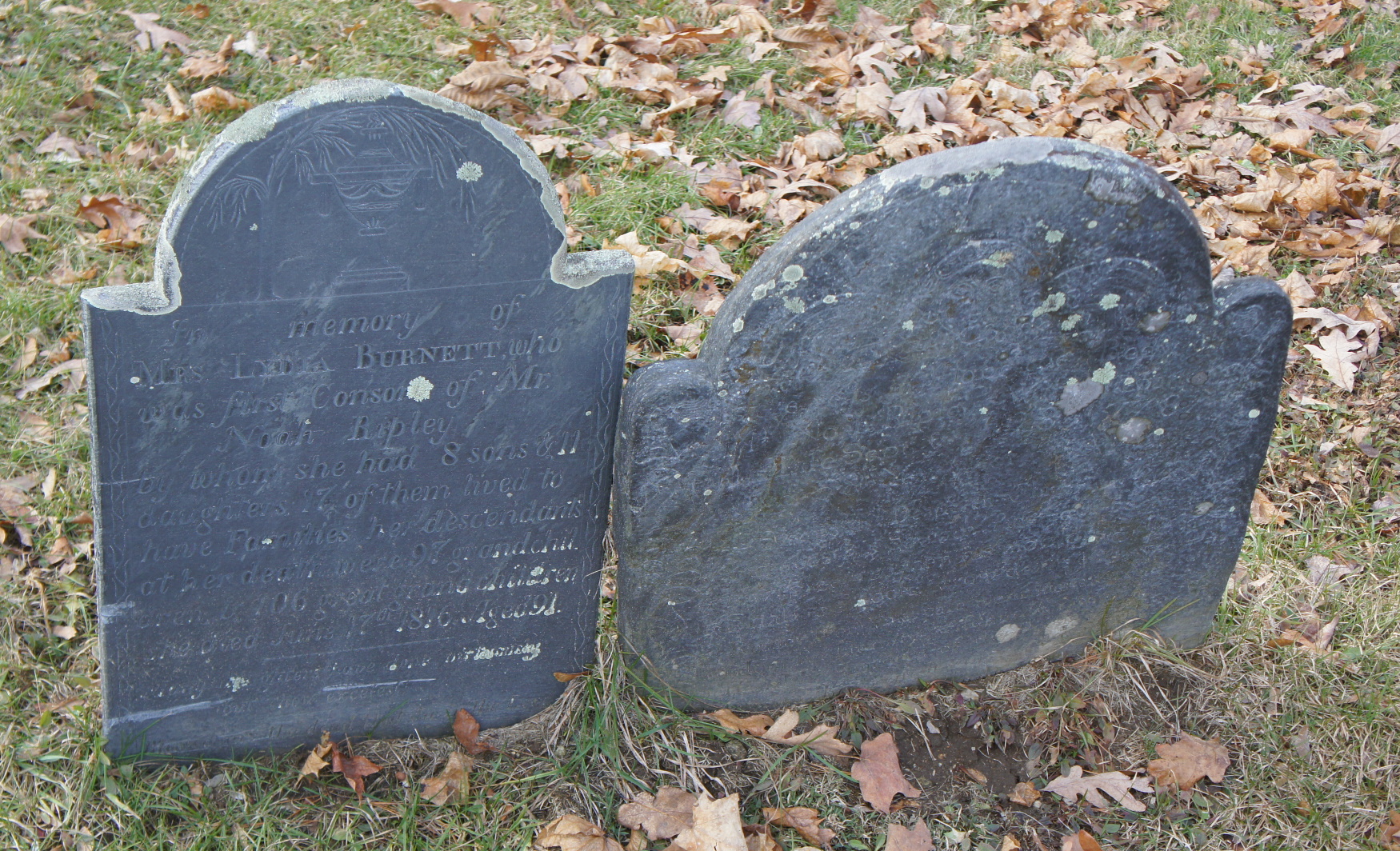
    South Burial Ground (Buckminster Cemetery) - Ripley tombstones are above and to the left of the sign. There are 7 Ripleys buried here: Lydia and Noah; their daughter Perthenia and son Noah; and son Noah's wife Lucy, son Minott, and son or grandson Arnold

              In memory of               |     Here rests in Hope the Body of    
         Mrs. Lydia Burnett, who         |     Mr. Noah Ripley. Who Departed     
         was first Consort of Mr.        |      this life Sept. ye 28 1778       
               Noah Ripley               |      in the 58th Year of his Age      
        by whom she had 8 sons & 11      | He sleeps in Death in Christ we trust 
       daughters 17 of them lived to     |    And sees his Savior face to face   
       have Families: her descendants    |   How precious then his moulding dust 
      at her death were 97 grandchil.    |   Shall be loosd from death's embrace 
       dren & 106 great grandchildren    | O Reader from this pale monument learn
      She died June 17th 1816 aged 91.   |  wisdom for Eternity-  wisdom for thy 
                  ------                 | Self and be reminded of thy Doom which
    Many daughters have done virtuously, |  hastens on the Swiftest wings of time
             but thou excelest           |     ... the death which ... the...    
           ---------------------                                                  
    Blessed are the dead that die in the Lord                                    
    

    JOHN PRESCOTT HEYWOOD was born Sept 13, 1754 in Concord. He married Elizabeth Wheeler of Concord in 1778, but they immediately moved to Lunenburg where their two children were born. Elizabeth died three weeks after their second child was born, and two years later JOHN married LYDIA RIPLY of Barre. JOHN and LYDIA had five children, all born in Lunenburg. Their son Deacon LINCOLN HEYWOOD was born April 29, 1791, married REBECCA PRIEST on May 26, 1814, was a deacon of the Unitarian Church, and died Oct 30, 1867. REBECCA died five years later. They had nine children including ABIGAIL HEYWOOD born Sept 25, 1816. She married HORATIO NELSON WELCH of Bolton.
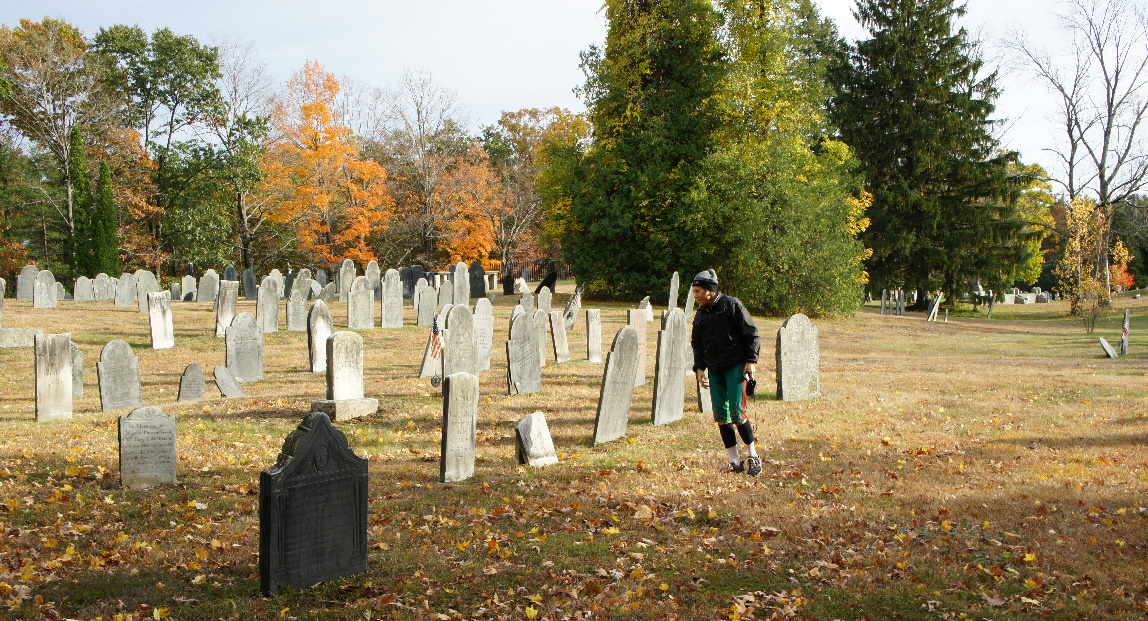
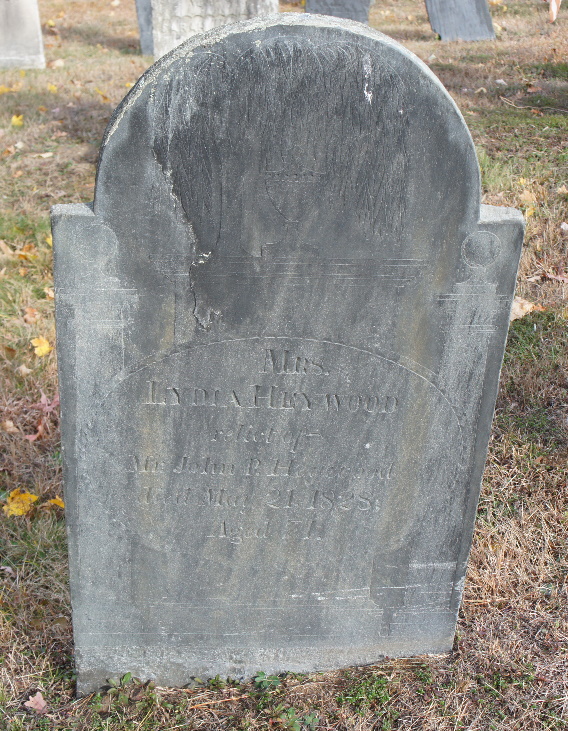
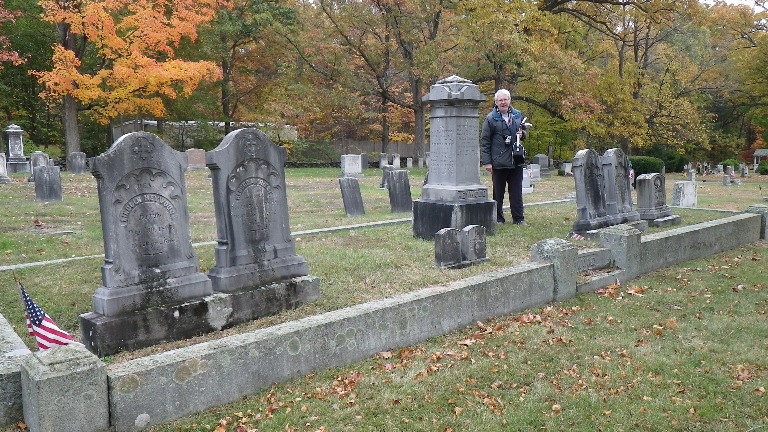
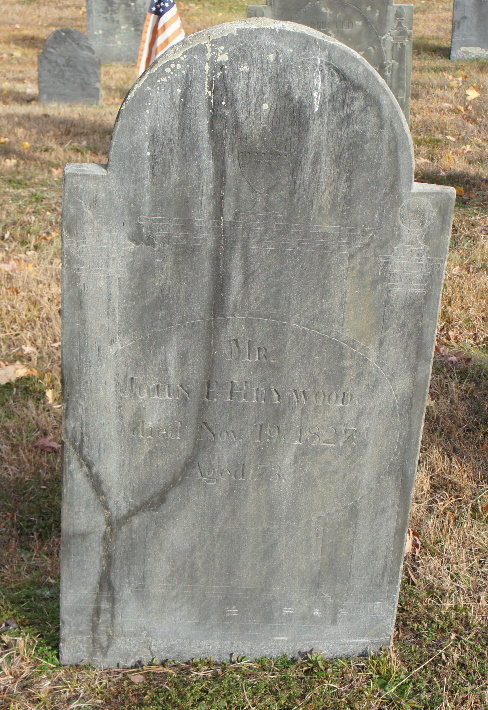
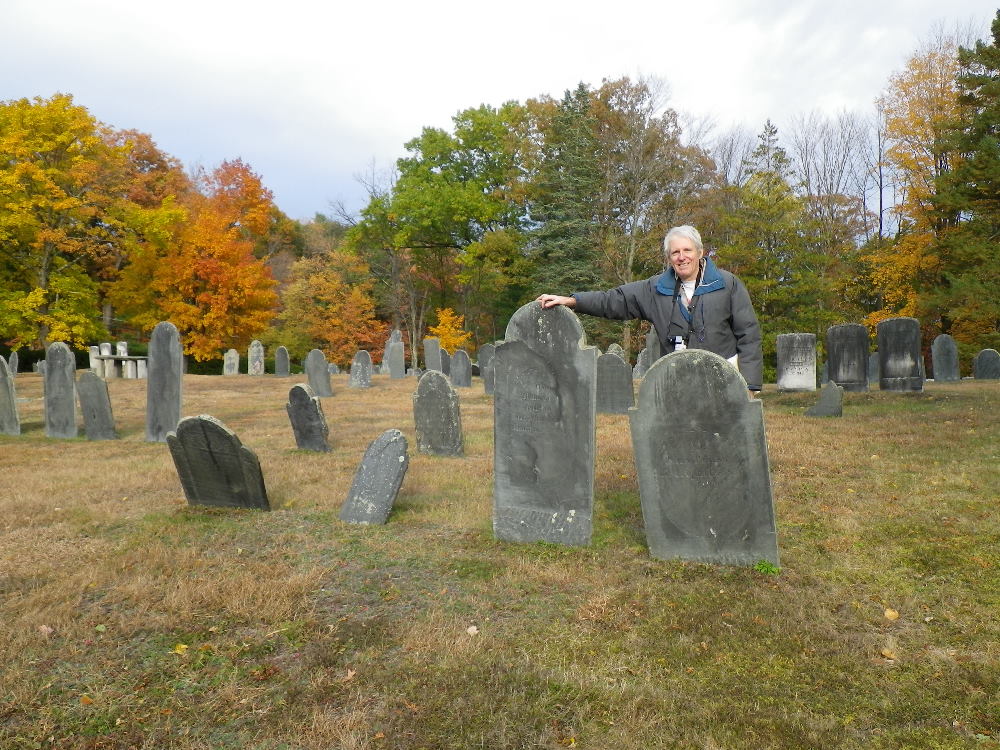
    Lunenburg South Cemetery - In photo below Sharon is in front of John and Lydia Heywood graves; the John Priest grave is partially hidden by her head; the Lincoln Heywood family is hidden by the tree.

           Mr.           |         Mrs.       
     John P. Heywood,    |    Lydia Heywood   
    died Nov. 19, 1827,  |      relict of     
         Aged 73.        | Mr. John P. Heywood
                         |  died May 21, 1828;
                         |       Aged 71.     
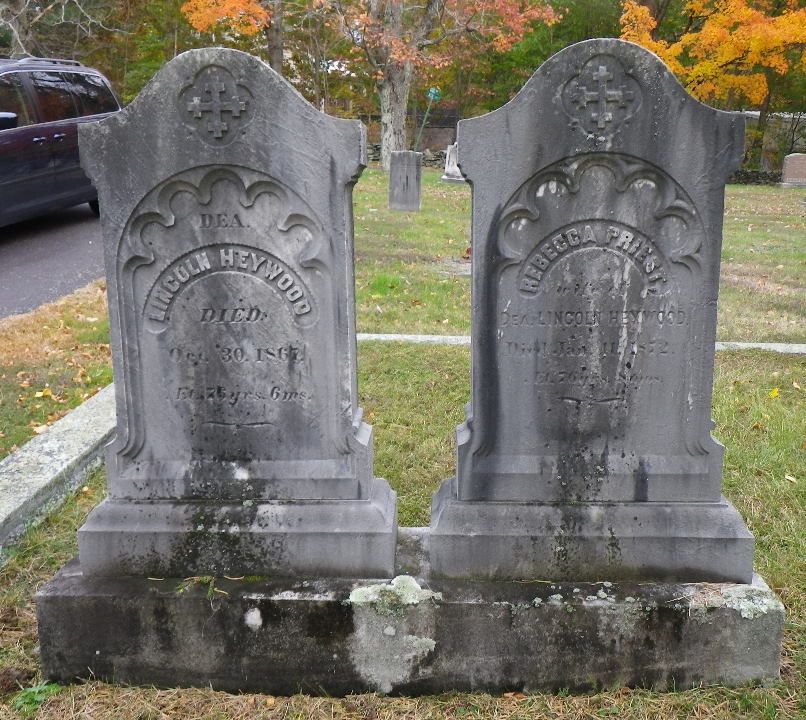
    
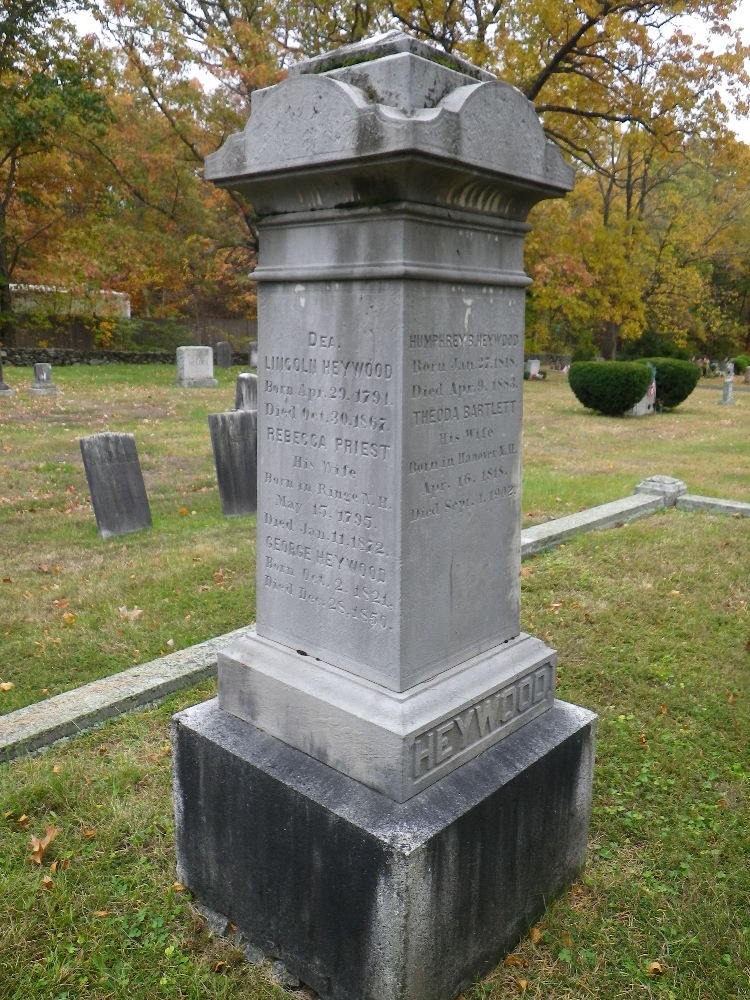
          DEA.        |  REBECCA PRIEST     
     LINCOLN HEYWOOD  |    wife of          
          DIED        | DEA. LINCOLN HEYWOOD
      Oct. 30, 1867   | Died Jan 11, 1872   
    AEt 76 yrs. 6 ms. |  AEt 76 yrs. 8 mos. 


    The HOLDEN family (1657-1694)
                                         |-Richard Holden
                     |- Justinian Holden-|
        Mary Holden -|                   |-Martha Fosdick
                     |- Mary
    
    The HOLDEN family is described in the Watertown and Woburn Chapters. They moved from Watertown to Woburn by 1649, and from Woburn to Groton in 1657. RICHARD had 975 acres of land, extending on the west bank of the Nashua river from a point near Beaver Pond to the northward, along the present northern border of the town of Shirley. He was constable in Groton in 1672, and surveyor in 1673. However when Groton was burned in 1676 during King Philips War, the family moved back to Watertown. MARTHA died there in 1681, while RICHARD spent his last years in Groton with his son Stephen, to whom he gave his real estate March 23, 1691. He died in Groton by 1694.

    JUSTINIAN's life is hard to piece together. He was born in Watertown in 1644, and moved with his family to Woburn by 1649 and to Groton by 1662. He married MARY in June, 1673, and had at least three children with her: MARY and Daniel born in Groton in 1680 and 1688, and Ebenezer born in Woburn in 1690. There is no record of whether he spent the King Philip's War in Woburn or in Watertown. His wife died in 1691 in Woburn, and he soon moved to Billerica where Dec 6, 1693 he married the widow Susanna Dutton Durrant and had one child born in 1694. In 1695 JUSTINIAN had problems with the tax collector in Billerica and he soon left the town. There is no record of where the family moved to, but he is said to have died in Watertown around 1699. Daughter MARY married JONATHAN FOSKET of Charlestown.

    The NUTTING family (1656-1676)
                      |-John Nutting
        Mary Nutting -|
                      |-Sarah Eggleston
    
    JOHN NUTTING's father may have worked for John Winthrop in England. JOHN came to Massachusetts perhaps as early as 1639, and settled in Woburn where he married SARAH in 1650. SARAH and her sister RUTH and mother ELIZABETH had been living in Roxbury, minus her father who had died at sea on the voyage from England. JOHN and SARAH had three children born in Woburn, including MARY born in January 1654/5. The family then moved to the western part of Chelmsford (now Westford), along with several friends from Woburn. JOHN was admitted to the church in 1656, and their three children were soon baptized. They lived near the modern village of Graniteville, perhaps on Nutting Road. They had two more children born in Chelmsford, but both died in infancy. In 1661, Groton was finally surveyed, and JOHN and two of his friends decided to move to the new town. However before they could move, they had to get the approval of their old church, which in this case did not want to lose three members at the same time. Several meetings were held to discuss the matter, at which time JOHN complained about his "remote accommodations" (his home was far from the site of the First Church at Chelmsford), and finally on December 23, 1661, a vote was taken and letters were granted to them to unite with the church at Groton. A grandson eventually took over his land in Chelmsford, which stayed in the Nutting family for generations. JOHN was a sexton in both Chelmsford and Groton, a Selectman in 1663, 1667, and 1669, and a constable in 1668. Here are some items in the Groton records:

    "June 21 1663. Its agreed by the Towne and manifested by vote that Mr. Willard if he accept of it shall be their minester... These persons following doe descent from the former vote RICHARD SAWTELL, Samuell Woods, James Parker, JOHN NUTTING, James Fiske."

    "Due to James Fiske & JOHN NUTTIN twenty shillings for laying out the hie-way to Chelmsford when they hauv perfited the work we they promise to doe as soone as they can." Later it was recorded the JOHN got his ten shillings.

    "Sep 21, 63. It is agreed by ye Towne with JOHN NUTTIN & voted that he the said JOHN shall keepe cleane the meeting house this ye[ar] or cause it to be kept cleene & for his labors he is to h[ave] forrteen shillings."

    "Novem. 1663. William Martin, Sergeant Parker Ric. Blud Wm. Lakin & JOHN NUTTIN are for thies yeare chosen Selectmen." He was elected again in 1667 and 1669.

    Nov 13, 1672 the town meeting voted "for pay for a woalfes head to JOHN NUTTING £0.10.0

    Dec. 10, 1673. Officers elected "for Surveyers RICHARD HOLDEN, Serg Lakin, John Page, and JOHN NUTTING Sen"

    JOHN and SARAH had three more children in Groton, and son John married in 1674. Life in a fronteer town would never be considered easy, but JOHN's position seemed secure in the middle of his society. He was certainly not the richest man in Groton; that was James Parker, who had a "fifty-acre right" in the town. (The acre right represented one's proportional interest in property owned by the town in common.) JOHN had a seventeen-acre right, while the poorest proprietor had a one-acre right.

    The history of Groton, and the NUTTING family, was abruptly altered by King Philip's War. JOHN's story ends rather abruptly with King Philip's War. The War broke out in the summer of 1675. Groton prepared for hostilities by fortifying five houses, called garrison houses. Four of the houses were in the middle of the town, on both sides of James's Brook; one of those was JOHN NUTTING's house, and another was James Parker's house. The fifth garrison was a mile away, the house of RICHARD SAWTELL. The men were also organized into a military company, in which JOHN was a corporal. The hostilities in Groton started March 2, 1676. Eight or nine empty houses were pillaged by a small band of Indians, and some cattle driven off. One settler was killed, Timothy Cooper. The town residents reacted by going to the garrison houses. A week later the Indians ambushed four men who were out with two carts to get hay; one was killed and one captured, though he escaped to Lancaster. This was the final prolog to the deluge four days later. On the 13th, over four hundred Indians crept into town under a chief named Monoco, also called One-eyed John. Using a simple ruse, two lone Indians lured the men defending the NUTTING garrison outside, and other Indians lying in ambush surprised the men and killed JOHN. The Indians simultaneously attacked the rear of the now-defenceless-garrison and pulled down the palisades. The five families in the house, along with the remaining men outside, successfully fled to Captain Parker's house. The Indians took over JOHN's house, and kept up fire on the other garrisons thoughout the day. At night, Monoco called out to Captain Parker, and claimed the Indians had burnt Medfield and Lancaster, and would burn Groton, "Chelmsford, Concord, Watertown, Cambridge, Charlestown, Roxbury, and Boston", adding, "What me WILL that me DO!". The Indians burned everything they could in Groton, including the first meeting-house of Groton. When the Indians left the following day, every dwelling except for the four remaining garrisons had been burnt. They cut the head off of JOHN NUTTING and "did set it upon a pole, looking unto his own lande".

    The remaining inhabitants soon loaded their remaining goods into carts and left, most to Concord. SARAH and her children lived a while in Concord, where MARY married SAMUEL HOWE. SARAH then returned to Woburn, where she lived with her sister RUTH until she died March 10, 1687. SARAH had to endure her father dying at sea on the voyage over from England, and her husband savaged by the Indians outside their home.

    The PRIEST family (1687-1776)
                                     |-Benjamin Priest
                       |-John Priest-|
        Rebecca Priest-|             |-Hannah Johnson
                       |-Rebecca Gibson
    
    
    BENJAMIN PRIEST lived most of his life in Lancaster or Harvard, and is described more fully in the Lancaster Chapter. At some point BENJAMIN moved to Lunenburg (perhaps to live with his son), where he died in 1817 and is buried in the cemetery (north or south?).
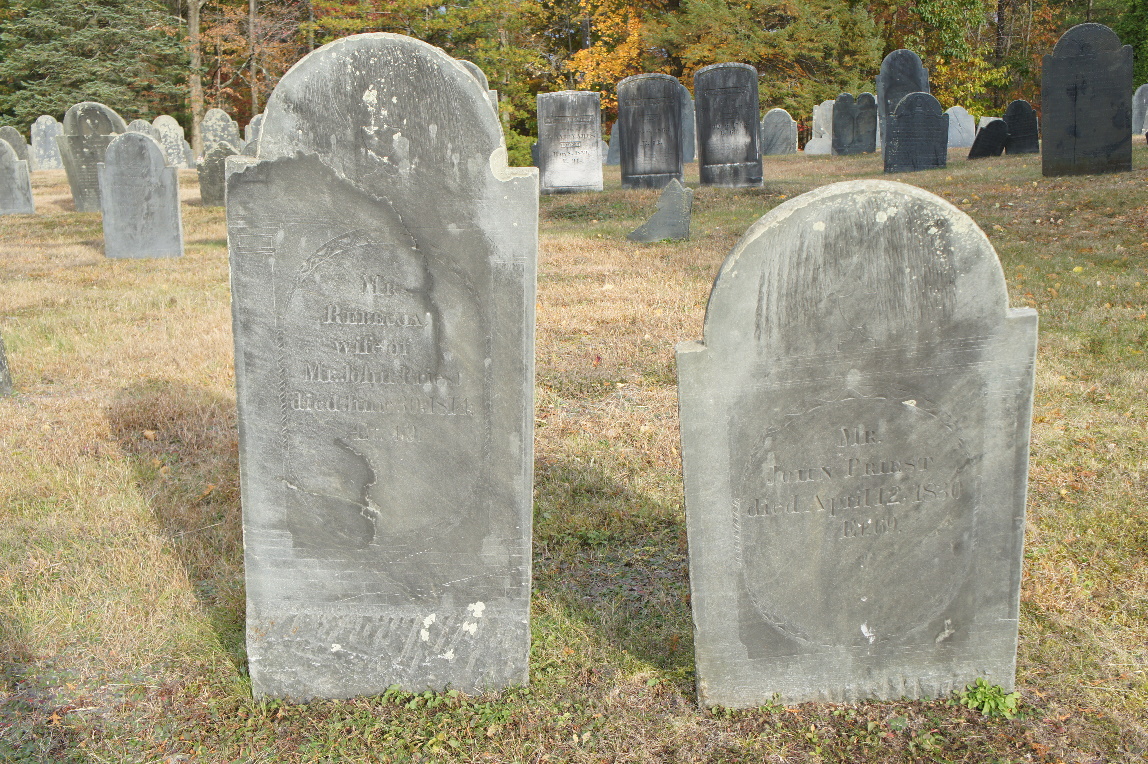
    JOHN PRIEST was the 5th and last generation of the Priest family to live in Lancaster, and like three of his ancestors, he also was in the military. He marched with his future father-in-law ABRAHAM GIBSON to Cambridge on April 19th, 1775, under the command of Col. Asa Whitcomb. He was also in Colonel Prescott's regiment during the summer of 1776, and is reported to have received 39 lashes for desertion. He moved to Fitchburg around that time, and there married REBECCA GIBSON in 1785. The family moved to Rindge, New Hampshire, where 11 of their 12 children were born, including REBECCA in 1795. The grandparents ABRAHAM and ESTHER GIBSON must have lived with them in N.H. since they disappear from the Fitchburg tax records after 1791, and ESTHER died in Rindge in 1803. JOHN was the low bidder ($330) to build the steeple of the new meeting house in 1796, although the builder of the rest of the building ended up doing the work (see photo of meeting house in section on ESTHER GIBSON). The family moved back to Lunenburg around 1810, and their last child was born there in 1812. The grandfather ABRAHAM died there in 1813, and wife REBECCA died there in 1814. JOHN promptly married Mrs. Phoebe Sherman, had two more children, and lived until 1830.
    Lunenburg South Cemetery

            Mrs.        |         Mr.        
          Rebecca,      |     John Priest    
          wife of       | died April 12, 1830
      Mr. John Priest   |       AEt. 69.     
    died June 30, 1814: |                    
          AEt. 49.      |                    


    The SAWTELL family (1636-1743)
                      |-Richard Sawtell
        Enoch Sawtell-|
                      |-Elizabeth Pople
    
    RICHARD SAWTELL, with his wife ELIZABETH and children including son ENOCH moved to Groton from Watertown in 1662. He served as Groton's first town clerk, from 1662 to 1664. His houselot in Groton was on the west side of James's Brook, just below the monument marking the birth-place of Colonel Prescott. He served in Major Appleton's company during King Philip's War, and his house was one of the five garrison houses in Groton, "near a mile distant from the rest" of the garrisons. When Groton was burned by the Indians in 1676, RICHARD and his family must have returned to Watertown, where they died. See more about the SAWTELL family in the Watertown Chapter.

    The WELCH family (1740-1860)
                              |-Horatio Nelson Welch
        Charles Francis Welch-|
                              |-Abigail Heywood
    
    HORATIO NELSON WELCH was born in July, 1811 in Bolton, and moved with his father THOMAS WELCH to Leominster, where THOMAS' new wife, Betsy Powers, was born and raised. HORATIO was still living in Leominster in 1836 when he married ABIGAIL HEYWOOD of Lunenburg. They had one child, CHARLES FRANCIS WELCH, born in Lunenburg. In 1840 the head of the State Lunatic Hospital in Worcester listed his employees: "Horatio N. Welch; Abigail Welch, his wife; age, from 25 to 30. Have been in the Hospital but a short time. Appear well; are capable, industrious, worthy people. Our impressions of them are very favorable." After this mention, the couple disappear for 20 years, and next show up in the 1860 census in Gardner, the town to the west of Leominster. HORATIO was a farmer with a personal estate of $3,000, and CHARLES was a chair maker (Gardner had 20 chair factories by 1910, and was called "Chair City"). Soon after HORATIO and ABIGAIL moved to Stoddard, N.H. where HORATIO became the proprietor of the Central House (a tavern and hotel). CHARLES, on the other hand, married Mary T. Swan on August 24, 1860 in Princeton, MA. They lived in Princeton four years when Mary died on July 13, 1864 and CHARLES then moved to Stoddard with his parents and joined the army on Sept 13, 1864. He fought in the Civil War in General Meade's Army of the Potomac, and fought in the assault on and fall of Peterburg in the last week of the War. He mustered out June 10, 1865. In 1868 CHARLES headed west, where in 1868 he became a farmer on a farm 2 miles east of Beloit, Kansas. He was also the assistant marshal, and performed the census enumeration of the town in 1870. He was listed as a farmer with a personal estate valued at $1000. In 1873 he married DOROTHY LUCINDA CROWTHER. Sometime in the next decade, HORATIO and ABIGAIL came to Beloit to live with their son and granddaughter MINNIE MAY WELCH, who was born Oct 19, 1874. ABIGAIL died in Beloit in 1879, but HORATIO was still living there in the 1880 census. HORATIO then returned to Massachusetts where he probably lived in Marlborough with his nephew Charles L. Welch. HORATIO's brother, Phineas Welch, had married Patty Stowe from Marlborough and lived in the home of her parents and inherited the house, known as the Stowe-Welch Farm, when the parents died sometime after 1850. Phineas died in 1870, when his son Charles inherited the house. When HORATIO died Nov. 18, 1887, Charles was appointed administrator of his estate. The
    inventory of the estate, filed July 22, 1888, came to $1,260.33 in the bank and $20. of clothing. HORATIO was the last of MINNIE MAY WELCH's ancestors to live in Massachusetts.
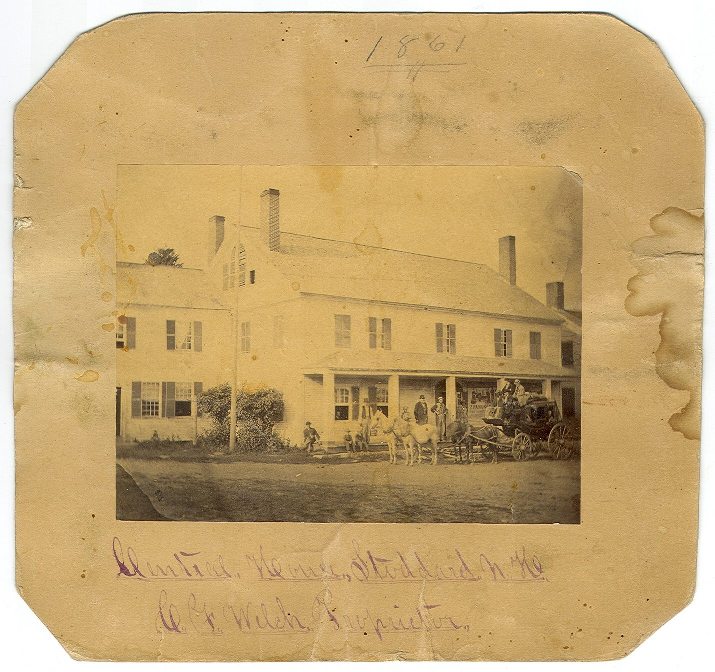
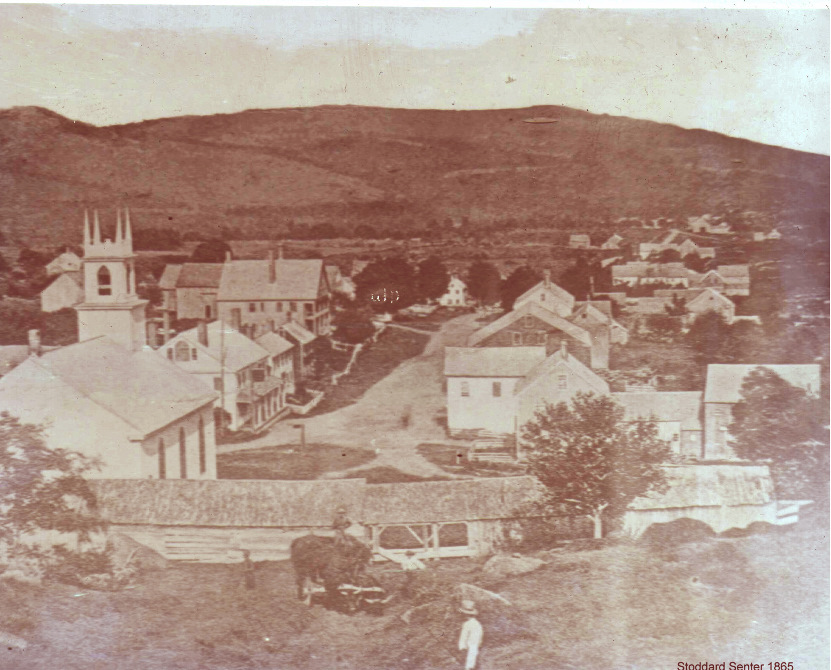
    Left: "1861 Central House, Stoddard, N. H. C. F. Welch Proprietor"
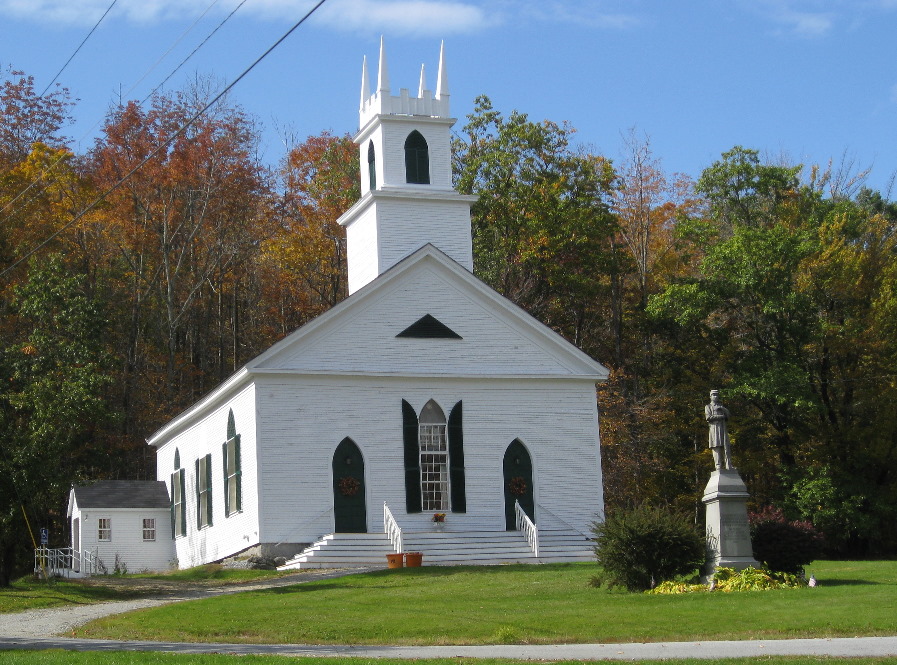
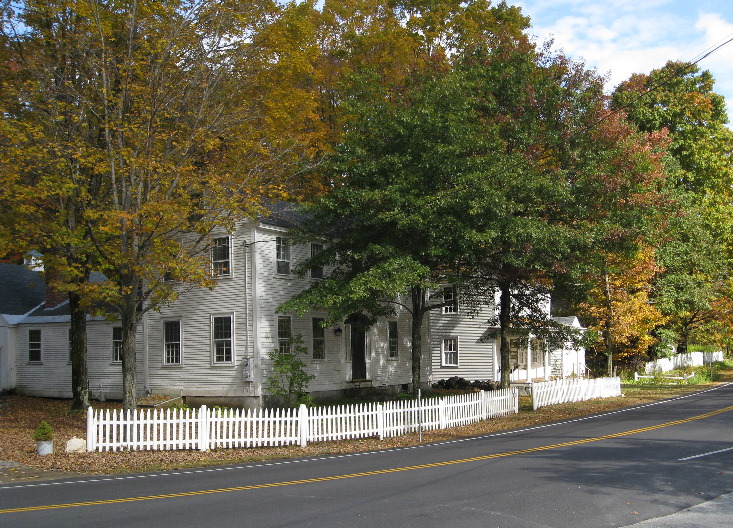
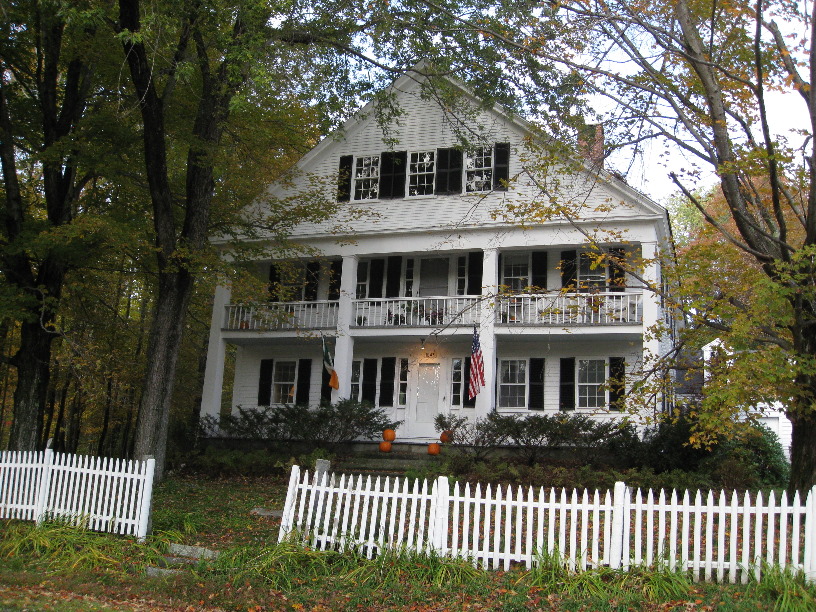
    Right: 1865 photo of Stoddard looking east; on the left are the Congregational Church, the Central House, the Loomis Hadley house, the Morse shop, and the Morse house. All still remain except for Central House. Capt. Jonathan F. Sanderson first built the Loomis Hadley house around 1834, followed by a tavern and hotel next door on the west side, later known as Central House, until it was razed in 1942. The tavern bar of the Central House ended up in the Spouter Tavern at Mystic Seaport, Mystic, CT.


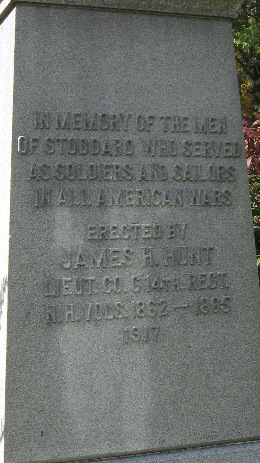
    Photos taken in 2009 of the Congregational Church; the inscription on the War Memorial; the Loomis Hadley house and the Morse shop; and the Morse house.